radar only reports, on purpose
A tool that updates your dependencies for you is a tool you stop reading. This one tells you what is wrong and leaves the fixing to you.
 josh donnell
maintains radar
Every team I have worked with has a dependency bot. Every one of them also has a column of its pull requests that nobody has opened in a month. The bot did its job. The humans stopped doing theirs, because the bot made it feel like someone else's.
When I started radar, I made one rule before writing any code: it never touches your lock files. It scans Composer and npm, stores a snapshot, and tells you what is vulnerable, outdated or abandoned. That is all.
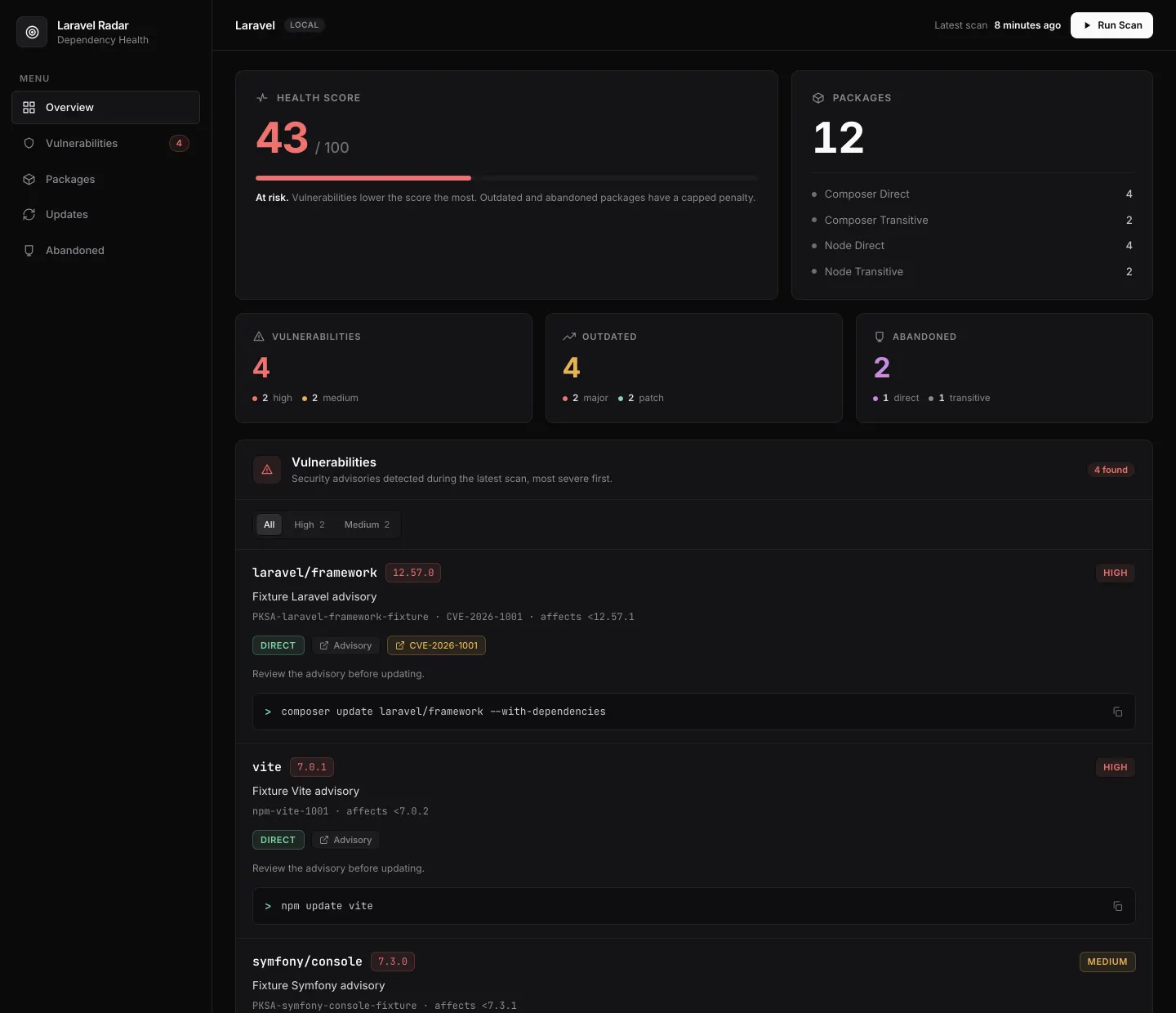
read-only is a feature
Installing it is one package and one command. The scan runs on demand, or nightly at 02:00 with onOneServer() so a multi-server deploy only scans once.
$ composer require joshdonnell/radar
$ php artisan radar:install
$ php artisan radar:scan
Outside your local machine, the dashboard sits behind a gate you define. I would rather you write one line of policy than trust a default you never read.
use Illuminate\Support\Facades\Gate;

public function boot(): void
{
    // Only admins see dependency health in production.
    Gate::define(
        'viewRadar',
        fn ($user = null): bool => $user?->is_admin === true,
    );
}
If a tool fixes things without asking, you stop knowing what is in your app.
- Report everything, change nothing.
- Give the exact command, and let a human run it.
- Make the nightly scan boring enough to trust.